
11/30/2025
Policy for Data Center Implementation: Regulating AI's Future

Leor Hersh
Founder and Writer
AI Data Center investment has skyrocketed in the last year, with tech companies pouring billions into planned infastructure. But is this the right way to go?
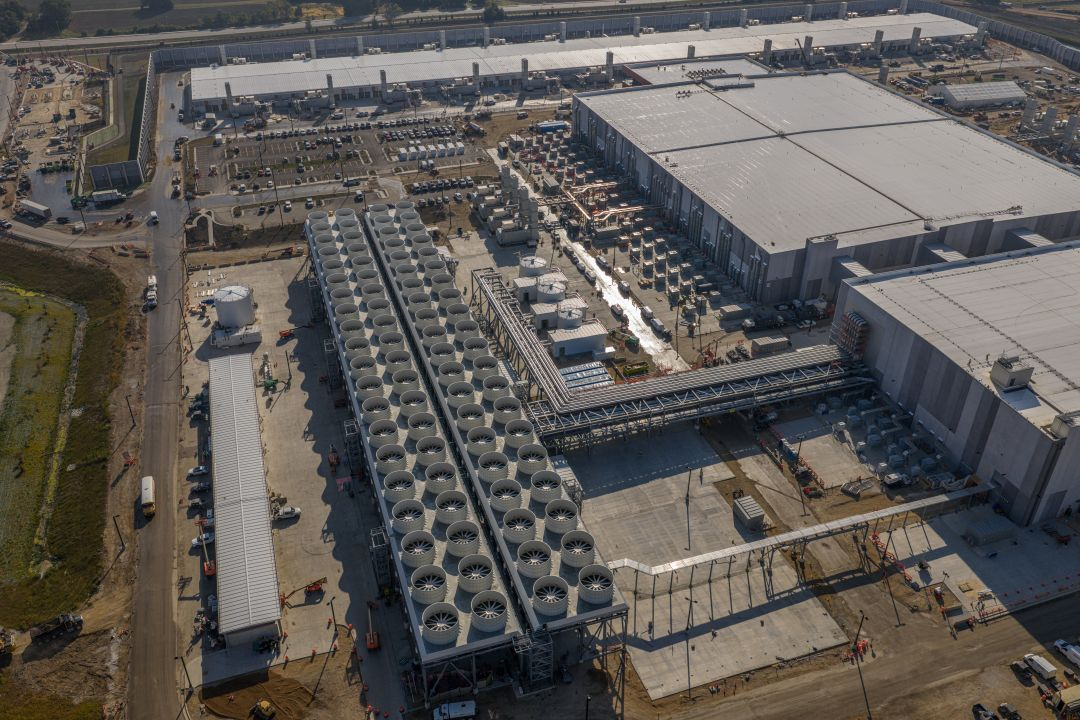
Should AI data centers be built in a hurry in America, and how should the energy grid be maintained? This paper proposes a federal wattage cap in addition to regulations surrounding the construction of data centers in the private sector. At its current trajectory, AI is functionally transforming the way that people think, act, and learn, and its long-term effects are still unknown. To power all the agentic features being implemented into companies' workflows, apps, and large language models, data centers work behind the scenes to make everything function. AI data centers occupy a massive amount of physical space, in addition to placing an immense strain on the electrical grid. This presents numerous difficulties during the building process of centers and creates challenges for neighboring communities, including less effective and inefficient energy supply to residential areas. This begs the question: how, if at all, should data centers be built, and at what capacities? This paper proposes a federal policy to limit the construction of additional gigawatts of data center power beyond government-reviewed thresholds, slowing the expansion of long-term AI implementation in America.
Data center usage is very costly, both for the environment and in creating a whole host of problems during its construction and use. Throughout my case study, I analyzed the externalities of data centers, both positive and negative. Due to the massive potential for investments in AI-related infrastructure to warrant high returns in the future, billions have been invested. These fast-paced investments come without an understanding of how AI will continue to develop, and without comprehensive research into how the infrastructure created harms the environment and the lives of individuals. In the world of AI investments, there is an ethical clash between negative externalities and making societies more efficient and more knowledgeable. The case study revealed that while data centers are fundamental to the AI revolution, there should be more policy surrounding the speed and use of centers as a whole. I propose a federally enforced cap on gigawatt capactivies for private AI data centers to slow depoloyement until the long-term impacts are understood.
Data center regulation is vital to the transformative AI tools that are currently on the market, and they are the roots of the problems that come with artificial intelligence implementation. AI has already begun changing the way people think, act, and handle complex situations. This boom is arguably the most important technological shift of our time, with the possibility for major changes in the ethics and principles of society. Every person, regardless of whether they use AI-related technologies, is affected. From individuals who are and will suffer from the consequences of data center implementation and the lack of available freshwater, to students in critical brain development stages, AI has devastating side effects on society. According to Goldman Sachs, AI could displace 6-7% of the US workforce if it is widely adopted (“How Will AI Affect the Global Workforce?”). Additionally, many AI experts and founders have warned that the mass job loss AI will cause will become devastating to economies, fully reshaping what human work entails. While we don’t know how intellectually advanced AI can become, we do know that measures need to be put in place now to ensure the safety and well-being of the human race. Government policy is one of the most effective ways to ensure the private sector follows rules and regulations, and through policy, things can get done, and the future can become more secure. By regulating data center implementation, the necessary power for the AI boom, the negative externalities can be regulated for the common good of societies across the world.
Currently, there is a massive amount of investment and optimism regarding the megawatts of electricity produced from AI data centers, but little to no regulation for the world’s biggest technology companies on how far they can expand. It is important to understand both sides of agentic and society-altering technologies before massive investments, and currently, that isn’t happening. Even worse, the current administration is treating the recent AI boom as a race with Chinese companies to create the first Artificial General Intelligence (AGI) to change the world. This is the wrong approach, as AI should be treated as a delicate tool with a fine line between an aid to society and a technology that provides power. The moment AI has the capabilities to become weaponized for immense world power is the moment the human race loses its ability to control its own fate and power over its decisions. That’s why I want to implement a policy to change just that. Data centers are at the root of the AI boom, and through the regulation of the amount of power that can be created by privately owned companies, the more regulation there can be surrounding the uses of AI. By proposing policy restrictions on the gigawatt power allowed per company based on market evaluations and assets, AI can be treated as a luxury of knowledge and power, and not as an infinite source that consumes an immense amount of natural resources. This cap would consist of a designed wattage capacity for every AI company. Through the regulation of data center infrastructure, companies can be more methodical about how they want to approach AI as it becomes increasingly more advanced, and whether their individual investments are worth the long run. This policy does a few major things. Firstly, it doesn’t eliminate or ignore AI as a technology in society, as it is here, and is here to stay for the foreseeable future. Secondly, its main purpose is to slow the rapid growth of AI to better understand its potential long-term effects within the job market, education, personal growth, and overall well-being of human thought and development. The goal of limiting AI data centers is clear: if you want to stop a toxic tree from branching out, you don’t cut off the branches, you cut off the roots.
The federal government would be in charge of enforcing this policy. Through concrete frameworks and an intensive analysis of how many gigawatts of power individual companies can build, the government can ensure the slowing of AI until years of analysis can be conducted and thoroughly researched. With this policy, the workers of America will benefit. This includes anyone from a gardener to an administrative consultant. This is not another technology, such as the computer, that will replace a few jobs and make millions more efficient. AI that is powered through data centers will change the way humans interact with the economy and money as a whole. With a current capitalist system that is overall beneficial to innovation and change, this is different. Everyone, except for the individuals and investors highly concentrated within wealthy companies, both AI-related and not, will benefit from this policy. This policy is far from perfect, and it would require the consensus of Congress to be passed into law. Many individuals might argue that AI is good for the progression of science, innovation, and can think through problems faster and better than any human. To that, I say that it is key that AI as powerful as that not be available to the overall public, much like nuclear weapons aren’t available to anyone as they walk down the street. This creates a structure where power can be controlled in the event that AI is exploited for authoritarian control and an imbalance of power.
The policy regarding the limitations of the AI data center construction is a direct response to the negative externalities that come with artificial intelligence’s presence in our lives. A negative externality refers to a cost or problem that is imposed on groups or communities not directly involved with the situation. With this policy, the goal is to eliminate many of the negative externalities associated with the implementation of AI in the workforce, such as the loss of jobs, knowledge, and human connection. This externality can be minimized through my policy, which would indirectly restrict the use of AI, therefore preventing many jobs from becoming no longer useful to humans. Additionally, the environmental toll of AI is extreme and is only steadily increasing. According to the UN’s Environmental Program, “These data centers can take a heavy toll on the planet. The electronics they house rely on a staggering amount of grist: making a 2 kg computer requires 800 kg of raw materials. As well, the microchips that power AI need rare earth elements, which are often mined in environmentally destructive ways (United Nations Environment Programme). The trade-offs between sheer power and intelligence beyond our comprehension are immense. While the upside of a technology like this is staggering, the environmental effects cannot be understated. In addition to many negative externalities, one key element that the policy hopes to address is to step back and use a cost-benefit analysis to assess the state of AI. This will help to create a thought-through and structured plan for the eventual implementation and regulation of the technology. Through a cost-benefit analysis and a deep dive into all the implications of AI, we humans can understand the skills and lifestyles we know will be necessary and useful in an AI-driven world. Stanford researchers recently conducted a study on AI’s performance on specific metrics in relation to various human skillsets.
The goal of my policy is to highlight the fundamental limitations of technological developments and where society should draw the line between advancement and alteration. There are limits for how far AI can go, especially when considering Earth’s resources, and the scarcity behind them. This is why it is key that the slowing of data center implementation is pursued, to both save natural resources that we can’t replenish and truly experience everything that we value as humans. This economic framework helps to shape an even stronger argument towards the reconsideration of how AI is being used, especially considering how, regardless of belief, there is a finite amount of stuff in the world. According to the Environmental and Energy Study Institute, “Large data centers can consume up to 5 million gallons per day, equivalent to the water use of a town populated by 10,000 to 50,000 people” (Environmental and Energy Study Institute (EESI)). That cannot be sustained. The immense water and energy usage is currently taking priority over communities' need for natural resources to thrive. Additionally, the capabilities approach is a necessary ethical lens to view this problem through. It's rooted in the idea that if a specific market failure (AI) is destroying people’s abilities to do something, then it is the government’s role to intervene in the situation. From the ability to think independently to the loss of many corporate jobs, AI has crossed the line of the capabilities approach to the point where a more extreme policy should be created. This framework prioritizes government control when the private sector can’t handle or chooses to ignore problems. With AI data centers, companies simply don’t want to slow down or stall ever. They are becoming immensely rich, and with every passing day, there is a new investment making headlines within the AI world. John Rawls argued that equality must be at a stage where you could hide behind a veil of ignorance and be chosen at random to be an individual and be content with that role. As AI progresses, the opposite will be likely. The individuals who are in control or highly ranked within major technology companies will become richer and richer, while everyone else will slowly become replaced and an afterthought in the progression of the technology.
Negative externalities must be balanced with a justice-focused lens for AI to be ethically handled. AI can be much more powerful and efficient than a human, but by taking into account the ethics of replacing human labor with machines, is it always right? No, and using the policy to limit how many data centers are created has the upside of making America more just. The government must intervene and show that even in a capitalist society, human lives and well-being must be prioritized over powerful technologies. Tech companies can't follow this policy without strict and clear laws in place, because it will cost them money. But money has become too central a goal for America, and we, as a country, need to step back and reassess our goals with AI and where we see it taking us. Currently, it is driven by investors who see a high upside, but the cost-benefit analysis has not been addressed for years into the future. Because my policy works to not erase the incredible power that AI has, but rather slow it down to create and research more guidelines, it will make society more fair for hard-working individuals. It is necessary for the economic upside of AI and the ethical viability of the technology to coexist for real progress to be made. By factoring in the importance of human life in the workforce, AI can be refocused to make companies more efficient without replacing necessary jobs.
With all of this said, AI is a very powerful tool, and by limiting its implementation in the world, some might argue that it is reducing the upside of progress and innovation. Additionally, AI can do so many things humans can’t even begin to approach, and does so immensely faster, something the human race has always wanted. This argument can go even further, especially when you consider what the role of a job is. If someone can do it better, you will get left behind, and if someone can do it 100 times faster, there is no need for anyone in that field. AI will force society to question the purpose of many jobs down the road and how money distribution will function at a fundamental level. Additionally, one study, published by the University of Cincinnati, found that AI could increase the global economy's worth by $15.7 trillion by 2023 (Fawley and Palomaki). To adapt to this argument, my policy regarding AI data centers will focus on ensuring powerful technologies stay within certain companies, much like how nuclear weapons aren’t available to the entire world. While this is a concentration of power and eventual wealth, it is necessary to protect the world from being destroyed under its own values and norms. Limiting data center gigawatt capacities corrects negative externalities, which creates more economic efficiencies. Additionally, this creates a fairer environment where equality can be more prevalent within an AI-driven world.
When the technology market is functioning properly, those who are already privileged will benefit from the new technologies, as they have the resources to invest. On the other hand, individuals who are already economically strained will struggle to keep up with booming markets, but with attention and resources. It all comes back to money and privilege. Once a company becomes big enough, profitability, sustainability, and fairness will no longer coexist. One or more will not be prioritized and will fade into their past. Even if a company claims to do all three things, it is infeasible, as the main priority will always circle back to increased profits and global reach. My policy works to try to change that by slowing down and rethinking how the economy will react and advance with AI, and creating more policies during that period of reconsideration.
Recent Posts